

Metal Pails
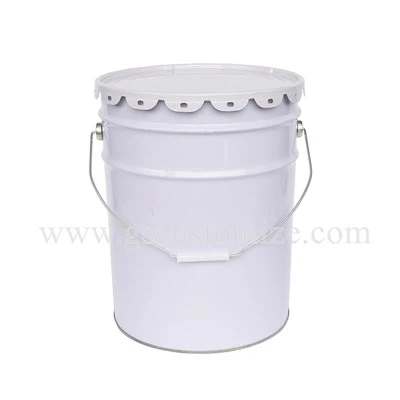
A metal pail is a large, cylindrical container that can hold up to liters of liquid or other materials. It is made of metal, typically steel such as blackplate, tinplate, galvalume steel plate and so on, which makes it strong and durable. The pail may have a handle for easy carrying and a tight-fitting lid to keep the contents secure. It is commonly used in industrial or commercial settings for storing and transporting chemicals, paint, lubricants, and other substances. Metal pails are also sometimes used for gardening, camping, and other outdoor activities.
Advantages of Metal Pails
Durability and Sturdiness: A metal bucket can handle tougher jobs
Metal buckets are much sturdier than their plastic counterparts. They can hold heavier objects without buckling, whereas plastic ones can become misshapen or crack under pressure. Additionally, metal buckets are less likely to tip over or collapse, making them a safer option for carrying and storing objects. It is worth noting that some metal buckets, such as galvanized steel, are rust-resistant and durable, making them ideal for outdoor use, such as gardening or carrying water during camping trips.
Heat Resistance: Metal Buckets can withstand high temperatures better than plastic
If you’re planning on using your bucket for hot liquids or in high-temperature environments, a metal bucket is a better choice. Where plastic buckets can quickly become hot when exposed to high temperatures, metal buckets can handle prolonged exposure without melting or becoming damaged. This makes them the perfect option for carrying hot liquids such as tar or oil or even hot embers from a fire pit.
Longevity and Sustainability: Metal Buckets can last for decades
Compared to plastic buckets, metal buckets have an incredibly long lifespan. They can last for decades with proper care and maintenance, whereas plastic buckets have a shorter lifespan and are susceptible to degradation due to UV exposure, harsh chemicals, and even everyday use. Metal buckets are also more sustainable than plastic. They are recyclable and can even be repurposed for various projects once their primary use has ended.
Attractiveness and Versatility: Metal Buckets can double as decorative pieces
Metal buckets have a more classic and rustic aesthetic than plastic ones, making them more attractive for decorative purposes. They can be used as planters, storage containers, and even as unique pieces in home decor. Additionally, metal buckets come in various sizes and designs, making them versatile and useful for a wide range of applications.



Customized services
We are good at customization. All our factories have decades of producing experience and professional engineers, cooperating with our patient and meticulous trade team, we will provide high-quality products and service to you, especially designing and producing according to your demand.
Technology
Experienced engineers provide you professional suggestions, designs and services.
Experience
International business staffs of over 15 years of experience and factories of 3 decades of production.
Our factory
We are located in zibo which is a traditional industrial city in north china with 39 among 41 divisions of the second industry in industry classification of national economy of china which covers the entire relative divisions of international standard industrial classification of all economic activities.
Types of Metal Pail
Open Head Pails
These pails feature a removable cover, allowing easy access to the contents. They are commonly used for storing and transporting liquids and bulk materials in various industries.
Tight Head Pails
Designed with a secure, non-removable lid, tight head pails are ideal for storing hazardous substances or materials that require a sealed container for safety and regulatory compliance.
Customized Pails
Tailored to meet specific customer requirements, customized pails offer unique features such as special coatings, branding, or size variations to suit diverse applications.
Application of Metal Pails
Chemicals
Metal pails are widely used in the chemical industry for storing and transporting various types of chemicals, including solvents, acids, and corrosive substances.
Paints & Coatings
With their durability and compatibility with different formulations, metal pails are a popular choice for packaging and distributing paints, coatings, and related products.
Food & Beverages
Metal pails are utilized in the food and beverage industry for packaging ingredients, such as flavorings, syrups, and concentrates, as well as for storing bulk quantities of liquids and powders.
Construction
In the construction sector, metal pails serve various purposes, including storing adhesives, sealants, lubricants, and construction chemicals, ensuring convenient access and safe handling on job sites.
Can Metal Pails Be Used As Flower Pots
Cleaning buckets
The surface of the bucket may harbor organisms that are harmful to plants, regardless if the bucket is new or previously used. Before planting in it, disinfect it to ensure your plants remain healthy. Wash the buckets thoroughly with warm soapy water. If necessary, scrub the bucket with a stiff brush. A final wash in a solution of 1 part bleach to 9 parts water kills any remaining organisms on the bucket, rendering it safe for plants. Allow the bucket to dry completely before planting in it.
Providing drainage
Plants require well drained soil to thrive. Standard plant pots are sold with drainage holes on the bottom, but buckets are not. Drill four ¼-inch diameter holes in the bottom of the bucket with a drill equipped with a metal bit to provide drainage. If you are using a lined bucket, poke holes in the bottom of the liner and set a drip tray in the bottom of the bucket beneath the liner. Remove the liner from the bucket after each watering and empty the collected water from the tray.

Rust issues
Choose buckets that provide some rust resistance, such as those made of galvanized steel. While the rust won't harm plants, it does cause the bucket to weaken and eventually become useless. If the bucket you use isn't rust resistant, consider a plastic liner. Liners are sold in a variety of sizes to fit into most containers, including buckets. A liner that is not as deep as your bucket is preferable.
Special considerations
Metal buckets require some special care that isn't usually necessary for other planters. The metal sides tend to heat up in the sun, which can dry out the soil more quickly or burn the plants. Set the buckets in an area where they receive some afternoon shade or where the bucket is in shade while the plant foliage receives full sunlight. If the soil dries quickly, more frequent watering is necessary. While heat can lead to dry soil, in cooler weather the soil may tend to remain overly moist since moisture cannot evaporate through the metal. Water less if the soil seems overly wet or soggy.
The solid content of sealant required for metal pail manufacturing is not the solid content by weight, but the solid content by volume. That is to say, if I buy one liter of sealant, there will be 0.7 liters of dry film after curing, and this is the sealant we need. To achieve a high solid content by volume, adding enough natural latex to the sealant is necessary. Natural latex contains very little water, and the volume remains unchanged after drying.
Some suppliers claim that their sealant has a solid content of up to 70%, which means that if you buy one kilogram of sealant, after curing, the dry glue can reach 0.7 kilograms. Is it worth it? These so-called high-value solid contents are just adding more white powder (or other solid powders), which are not worth much. Then add water, and the water will precipitate. The bottom is thick and hard, and the top is thin water. What do they do? Add thickener.
The solid content in terms of weight is calculated by using white powder, and has very little elasticity.This causes leakage problems in the steel pail.
How to Prevent Leakage in Metal Pails
1. Use high-quality steel plates and welding techniques to ensure the overall strength and sealing of the pail.
2. Add sealing materials like O-ring gaskets to the interface of the pail to ensure good sealing.
3. Spray anti-rust paint on the surface of the pail to prevent rust from affecting the sealing.
4. Keep the mouth of the pail dry and clean during use to avoid dust, impurities, etc., from entering the inside of the pail.
5. Pails in a cool and dry place and avoid exposure to strong light, high-temperature environments, or condensation water that may affect the sealing of the pail.

The metal pails industry is currently a robust and growing sector globally. The industry is highly competitive, with a range of manufacturers providing diverse offerings to clients. Some companies specialize in the production of custom metal pails while others provide a wide range of standardized products. The industry is also constantly evolving, with new technologies driving various advancements and innovations in the field.
However, the impact of the COVID-19 pandemic has somewhat slowed down the growth of the industry. The global pandemic has led to disruptions in supply chains, reducing access to raw materials, and a fall in demand for non-essential products. Despite these challenges, the industry is expected to witness substantial growth in the post-pandemic period as the economy rebounds. The industry is forecasted to experience increasing demand for metal pails from several sectors, such as food and beverages, pharmaceuticals, and chemicals, further propelling the industry's growth.
The Manufacturing Process of Metal Pails
Metal Pails have become an integral part of our daily lives, serving as containers for various products ranging from food and beverages to industrial goods. Understanding the manufacturing process behind these Pails can provide valuable insights into the intricate steps involved in their production.
The manufacturing process of metal Pails typically begins with the selection of suitable materials. Steel is the primary metals used due to their durability, strength, and recyclability. These metals undergo a series of transformations to become the sturdy Pails we encounter in stores.
The first step is metal preparation. The chosen metal is processed into sheets or coils, ensuring uniform thickness and quality. These sheets serve as the foundation for the subsequent stages of Pails production.
Shaping the metal is the next critical phase. Using specialized machinery, the metal sheets are cut into precise shapes, usually circles or rectangles, and formed into cylindrical bodies. This process involves techniques like deep drawing, which uses punches and dies to stretch and shape the metal into the desired can shape. Ironing is another method employed to refine the shape and dimensions of the Pails.
Once the Pails are shaped, they go through the printing and decoration stage. Graphics, branding elements, and labelling are applied to the Pails to enhance their visual appeal and provide vital product information.
Sealing the Pails and attaching the lids or ends comes next. The Pails are carefully sealed to ensure an airtight and secure enclosure for the contents. Seaming, a common technique in can manufacturing, involves mechanically folding and interlocking the can body with the lid or end, providing a reliable seal.
Throughout the manufacturing process, quality control measures are implemented to maintain the integrity and safety of the Pails. Inspections, testing procedures, and adherence to stringent regulatory standards help identify and rectify any potential defects or issues, ensuring that the final product meets the highest quality standards.
By gaining insights into the manufacturing process of metal Pails, we can appreciate the meticulous craftsmanship and precision involved in their creation. From material selection to shaping, printing, sealing, and quality control, each step contributes to producing Pails that are not only functional but also visually appealing and reliable.
How to Prevent Rusty Metal Pails
Metal pails are known for their durability and strength, but with winter creeping up on us, it is important to take the proper precautions before storing products away. During storage, it’s common for metal pails and buckets to develop rust. If you want to avoid rusty metal pails and buckets, then we have your solutions right here.
Here's how to prevent rust from forming in your metal pails:
Avoid storing metal pails in trailers or outside
When storing metal pails and metal buckets, we highly recommend to our customers that they avoid storing them anywhere other than the inside of a warehouse. The most common problem with storing outside, or in a trailer, is temperature variation. Metal pails can become quickly damaged due to the moisture and frequent temperature fluctuations. This can compromise the purity of the metal, as well as the product contents within the metal buckets.
When storing within a warehouse, try to avoid storing near dock doors, large fans, or hvac systems. These areas can be considered harmful due to the increased chance of temperature variation. For the most effective storage of metal pails, store inside a warehouse and away from any outdoor elements or moisture.
Purchase metal pails with rust inhibitors
Some of our metal pails are equipped with a rust inhibitor coating. A rust inhibitor interior coating prevents pails from rusting for up to 30 days, and helps to maintain the purity of sensitive products. This coating is not intended to act as a lining, but rather an added layer of protection. These coatings are manufactured with raw materials that conform to all the requirements of the fda regulations. Not all steel pails or metal buckets are lined with rust inhibitors, but if you are worried about developing rust, try purchasing pails with rust inhibitors.
Metal pails have plenty of benefits compared to plastic pails including their heavy-duty body and strong hold. However, metal pails are prone to develop rust if not properly stored and maintained. This can lead to anywhere from a few steel pails, to a whole truckload of metal buckets becoming unusable. The development of rust is often due to poor storage conditions maintenance rather than how they are manufactured. Follow the steps laid out above to prevent rust in your metal pails during storage.
FAQ
We're professional metal pails manufacturers and suppliers in China, specialized in providing high quality products and service. We warmly welcome you to buy high-grade metal pails from our factory. For more information, contact us now.
